
Back to all articlesRestorative Dentistry Dr. Muhammad Rahim, DMDOctober 12, 202610 min read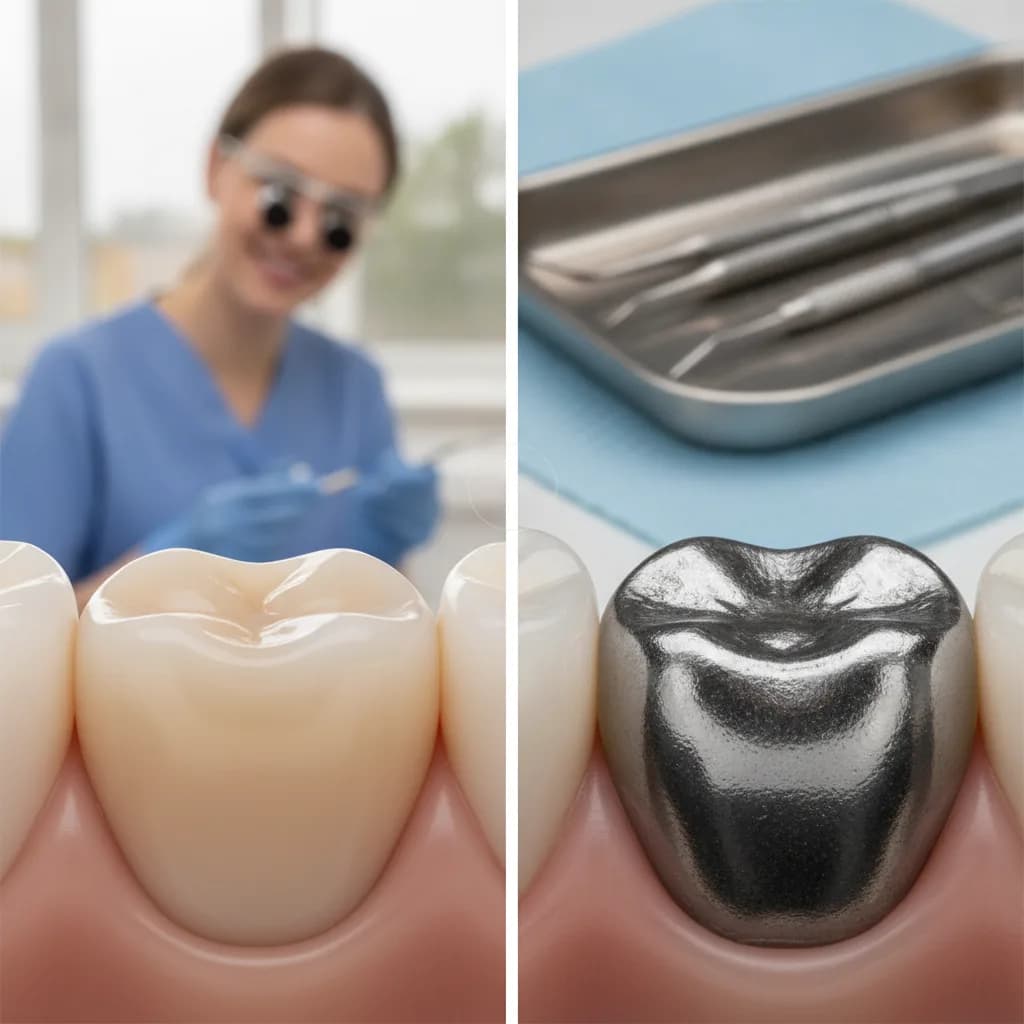
Tooth-Colored Fillings vs Amalgam: Which Is Better?
Dr. Muhammad Rahim, DMDOctober 12, 202610 min read
Loading blog post
Dr. Muhammad Rahim, DMDOctober 12, 202610 min readCall and you'll reach a real person on our team: no phone tree, no hold music. We'd genuinely love to help.
(603) 924-3664Rather write to us? Contact us
If you have a cavity, one of the first choices you'll face is what to fill it with. The debate of tooth-colored fillings vs amalgam comes down to a few practical trade-offs: how it looks, how long it lasts, what it costs, and where the cavity sits in your mouth.
Both materials are safe and effective. Major health organizations back both, so this isn't a question of one being dangerous and the other not. It's about matching the right material to your specific tooth, budget, and priorities.
This guide compares the two across appearance, durability, cost, and safety. It also explains why Peterborough Family Dental places tooth-colored fillings and what it uses for cavities too large for any filling.
Need a filling and not sure which material fits?
Peterborough Family Dental & Implant Center helps patients across the Monadnock region weigh their options.
Request an Appointment →Fillings are one of the most common dental services at the practice, and the material choice is a question nearly every patient asks.
Tooth-colored fillings are made of composite resin, a blend of plastic and fine glass that matches your natural tooth shade. Silver amalgam is a durable mix of metals, including silver, tin, copper, and mercury, that the ADA notes has been used in dentistry for more than 150 years. Both repair cavities effectively.

Composite resin bonds directly to the tooth, which lets the dentist preserve more of your natural structure. As the ADA's overview of tooth-colored fillings explains, composites resist fracture well in small-to-mid-size fillings and can be used on front or back teeth, which is a big part of why they've become so popular.
Amalgam, on the other hand, is prized for sheer toughness. The mix of metals hardens into a material that withstands heavy chewing forces for years. Despite the word "mercury" raising eyebrows, the mercury is chemically bound into a stable alloy once set, which is why health authorities consider it safe.
Before the detailed comparison, here's the short version of what each brings to the table:
Tooth-colored fillings win on appearance and conservative bonding, while amalgam wins on durability and cost. Composite suits visible teeth and smaller cavities; amalgam suits large cavities in back molars that take heavy force. Each has clear strengths depending on the situation.

The table below lays out the main differences side by side so you can see where each material shines.
| Factor | Tooth-colored (composite) | Silver amalgam |
|---|---|---|
| Appearance | Matches natural tooth color | Silver, visible when you open wide |
| Durability | Strong for small-to-mid cavities | Very durable, ideal for heavy chewing |
| Cost | Higher; may not be fully covered | Lower; often well covered |
| Tooth structure | Bonds, preserves more tooth | Needs more shaping to hold |
| Best for | Front teeth, visible spots, small fills | Large back-molar cavities |
No single row decides the matter. A small cavity on a front tooth points clearly to composite, while a large one in a molar that grinds through every meal may favor amalgam. Most decisions weigh several of these factors together.
It's also worth noting how usage has shifted. Tooth-colored fillings are now placed more often than amalgam in many practices, driven largely by the demand for natural-looking results and the steady improvement in composite materials. That doesn't make amalgam obsolete, it remains the better pick in certain situations, but it explains why most new fillings you'll see today are tooth-colored.
Cost is often the deciding factor in the other direction. Amalgam typically runs less per filling and tends to be more reliably covered by dental insurance, while composite can carry an out-of-pocket difference. For a patient on a tight budget filling a molar no one sees, that gap can reasonably tip the choice toward amalgam. Most dental plans treat fillings as a basic service and cover 70% to 80% of the cost after the deductible, though some pay only the lower amalgam rate. Neither motivation, looks or cost, is wrong. They're just different priorities.
At Peterborough Family Dental, every new filling is tooth-colored composite. When a cavity is too large for a filling to hold up, the team turns to an inlay, onlay, or crown instead of amalgam, because those restorations last longer and protect the tooth better.
Related: Cavity too big for a filling? See how inlays and onlays compare with fillings and crowns. Inlays and onlays explained →
1 in 4
U.S. adults has untreated tooth decay
Source: CDC NCHS
That's why the filling question comes up so often. Regular dental visits catch roughly 80% of oral health issues before they become serious, according to the ADA, including decay small enough to fix with a conservative filling.
Amalgam generally lasts longer than composite, often 10 to 15 years or more, thanks to its durability under heavy chewing. Composite fillings typically last around 7 to 10 years and may need replacing sooner in high-pressure areas. Both can last well with good oral care.
That said, the gap has narrowed. Composite materials have improved dramatically, and for the small-to-mid-size cavities they're used in, they hold up well. The ADA notes that no filling lasts forever, and some studies show composites may need replacing more often than amalgam in heavy-load spots.
Longevity also depends on you. Grinding your teeth, chewing ice or hard candy, and skipping checkups all shorten a filling's life, whatever the material. A well-placed filling cared for properly often outlasts the average. Your habits matter as much as the material you choose. Checkups help too: Americans who visit a dentist regularly are 60% less likely to lose teeth, according to the Journal of Dental Research.
There's also the question of what happens when a filling does wear out. A failing composite can often be repaired or replaced with another composite without much fuss. Replacing any filling removes a little more tooth structure each time, which is one reason dentists favor conserving the tooth from the start. Choosing well the first time pays off over a lifetime of dental work.
Yes, decades of research support the safety of amalgam fillings for the general population. The ADA, CDC, FDA, and World Health Organization all agree that amalgam is a safe, effective cavity-filling material. The mercury becomes chemically stable once bound into the set alloy.
There's a nuance worth knowing. The ADA's review of amalgam affirms its safety, while the FDA has suggested that certain higher-risk groups, such as pregnant women and young children, may reasonably choose to avoid new amalgam fillings when a suitable alternative exists. This is a precaution, not evidence of harm.
For most people, the safety question is settled, and the decision really comes down to appearance, cost, durability, and personal preference. If you have specific health concerns or fall into one of those groups, raise it with your dentist, who can walk you through the options that fit your situation.
What about old amalgam fillings you already have? The ADA doesn't recommend removing intact, working amalgam purely to swap materials, since drilling it out removes healthy tooth. But a filling that's cracked, leaking, or decayed underneath should be replaced, and many patients also choose to replace old metal fillings for appearance. Your dentist checks the tooth first either way.
Still weighing your filling options?
A consultation at Peterborough Family Dental can help you choose the right material for your tooth and budget.
Request an Appointment →Choosing the right filling means weighing the cavity's size and location, your budget and insurance, how visible the tooth is, and any personal preferences. A small front-tooth cavity usually calls for composite, while a large back-molar cavity may favor amalgam. Your dentist guides the final decision.
Four questions to ask at your appointment
Remember, you have the right to decide. The ADA is clear that material choice is a shared decision between you and your dentist, made after weighing your individual situation. There's no wrong question to ask at your appointment.
One practical tip: ask your dentist to explain the trade-off in terms of your specific tooth, not just materials in the abstract. "For this cavity, in this spot, given how you chew, here's what I'd recommend and why" is far more useful than a generic pros-and-cons list. A good dentist welcomes that conversation and will lay out the reasoning plainly.
Peterborough Family Dental uses tooth-colored composite fillings that match your natural shade. For cavities too large for a filling, the team recommends an inlay, onlay, or crown instead. Old metal fillings that are cracked, leaking, or unwanted can be replaced with composite after the tooth is checked.

Dr. Muhammad Rahim, DMD and Dr. Jasper Ainslie, DDS take an honest, education-first approach, so you leave understanding why a particular material was recommended. The practice keeps early-morning hours for busy schedules and serves families across the Monadnock region, including Jaffrey, Dublin, and Hancock.
The appointment itself is simple, and most single fillings take one visit:
Composite takes a little longer than amalgam because the tooth has to stay completely dry while each layer bonds. You can usually eat soon afterward, though it's smart to wait until the numbness wears off.
⚠ Call the office if a filling
In the tooth-colored fillings vs amalgam choice, the best filling is the one that fits your cavity, budget, and goals. Both materials are safe, so it's less about a winner and more about the right match for your tooth.
If you have a cavity to address or simply want to understand your options, the team at Peterborough Family Dental & Implant Center is glad to help you decide.
Keep reading
Results may vary. Please consult with your dentist at Peterborough Family Dental for personalized treatment recommendations.
Get the right filling for your smile
Schedule a visit at Peterborough Family Dental & Implant Center to discuss your filling options and find the best fit for your tooth.
Request an Appointment →Have questions or want to speak with our team?
Contact Us →
Dr. Muhammad Rahim, DMD
Dentist · Peterborough Family Dental & Implant Center
Peterborough, NH dentist providing gentle general, cosmetic, restorative, and implant dentistry for the whole family.
Was this article helpful?
Neither is universally better. Tooth-colored composite looks natural and preserves more tooth, while amalgam is more durable and affordable for large back-tooth cavities. The right choice depends on the cavity's size, location, your budget, and personal preference.
Our Peterborough team is happy to answer questions and get you on the calendar.


