
Back to all articlesRestorative Dentistry Dr. Muhammad Rahim, DMDOctober 12, 202610 min read
Types of Dental Crowns: Materials, Cost, and Lifespan
Dr. Muhammad Rahim, DMDOctober 12, 202610 min read
Loading blog post
Dr. Muhammad Rahim, DMDOctober 12, 202610 min readCall and you'll reach a real person on our team: no phone tree, no hold music. We'd genuinely love to help.
(603) 924-3664Rather write to us? Contact us
If a tooth is cracked, heavily decayed, or worn down, your dentist may recommend a crown. The next question is usually which one. The types of dental crowns differ in looks, strength, and price, and the right pick depends on the tooth.
A crown is a custom cap that fits over a damaged tooth and restores its shape, strength, and appearance. It's one of the most reliable dental services for saving a tooth that a filling alone can't fix.
This guide compares the main crown materials, what affects the price, and how the process works, so you know what to expect before you sit in the chair.
Think you might need a crown?
Peterborough Family Dental & Implant Center provides crown consultations for patients across the Monadnock region.
Request an Appointment →A dental crown is a custom-made cap that covers a damaged tooth to restore its strength, shape, and appearance. You may need one after a root canal, to protect a cracked or weak tooth, to cover a large filling, or to improve the look of a misshapen or discolored tooth.
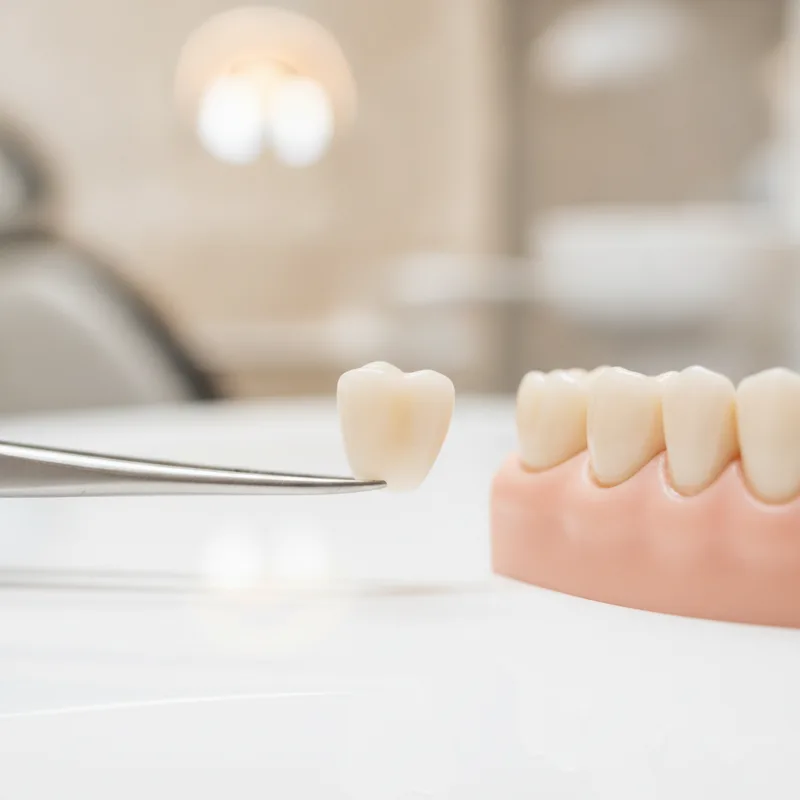
Think of a crown as armor for a tooth that can no longer protect itself. When decay or a crack has removed too much structure for a filling to hold, a crown wraps the whole visible tooth, holding it together and letting you chew normally again.
The ADA's overview of crowns explains that they restore both function and appearance. And the damage behind them is common: nearly 1 in 4 U.S. adults has untreated tooth decay, according to the CDC's National Center for Health Statistics.
Common reasons a dentist recommends a crown include a tooth weakened by a large filling, a fracture, severe wear from grinding, or a tooth that's just had a root canal and needs protection. Crowns are also used to cap dental implants and to anchor bridges. In short, when a tooth needs more than a filling but is still savable, a crown is often the answer.
The root canal case is especially common. After a root canal, the treated tooth becomes more brittle because its inner blood supply is gone, so a crown is usually placed to keep it from cracking under normal chewing. Skipping that step is one of the more frequent reasons a treated tooth fails later, which is why dentists tend to recommend the crown as part of finishing the job rather than an optional add-on.
1 in 4
U.S. adults has untreated tooth decay, the kind of damage that often ends in a crown
Source: CDC NCHS
The main types of dental crowns are all-porcelain or all-ceramic, porcelain-fused-to-metal, gold or metal alloy, and zirconia. Each balances appearance, durability, and cost differently. Porcelain and ceramic look the most natural, while metal and zirconia are the strongest for back teeth.
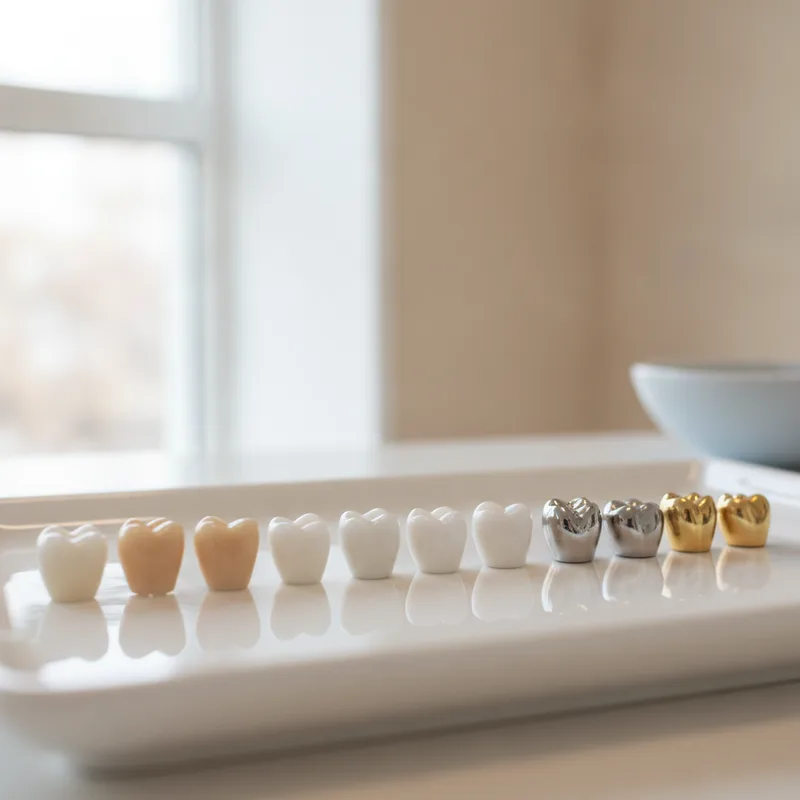
Choosing a material comes down to where the tooth sits and what matters most to you. A front tooth usually calls for the natural look of porcelain or ceramic, while a hard-working back molar may favor the strength of zirconia or metal. The table below sums up the trade-offs.
| Type | Best for | Key trait |
|---|---|---|
| Porcelain / ceramic | Front teeth, visible spots | Most natural appearance |
| Porcelain-fused-to-metal | Front or back teeth | Natural look with added strength |
| Zirconia | Back molars, grinders | Very strong, fairly natural |
| Gold / metal alloy | Out-of-sight back teeth | Extremely durable, gentle on opposing teeth |
There's no single best material, only the best fit for your tooth and priorities. Your dentist will weigh appearance, the forces on that tooth, and your budget to recommend the right option.
Zirconia is a ceramic, but a very tough one. Solid zirconia crowns, such as the BruxZir brand, are milled from a single block with no porcelain layer on top, so there's nothing to chip off. That makes them a strong choice for back molars and for people who grind.
The trade-off is looks. Solid zirconia is slightly less translucent than layered porcelain, so it's usually saved for teeth that don't show much when you smile. For front teeth, a layered ceramic still gives the most lifelike result.
Materials have improved a lot in recent years. Modern all-ceramic and zirconia crowns can now combine the natural look once reserved for porcelain with strength that rivals metal, which is why metal-free crowns have become so popular. For someone who wants a back molar both invisible and tough, today's zirconia is often a sweet spot that didn't really exist a couple of decades ago.
Crown cost depends mainly on the material, the tooth's location, and whether preparatory work like a root canal or buildup is needed. Porcelain, ceramic, and zirconia crowns usually cost more than metal alloys. A consultation gives you a personalized estimate before anything starts.
Rather than a single price, it's more useful to understand what moves the number. The crown material is the biggest factor, but the tooth's condition matters too: a tooth that needs a root canal, a post, or a core buildup before the crown will cost more overall than a simple cap on a sound tooth.
A few factors shape the final figure:
Most dental insurance covers part of a crown when it's needed to restore function, not purely for cosmetic reasons. The team can review your benefits and financing options so the cost is clear before treatment begins.
It's worth weighing cost against value here too. A crown is a bigger investment than a filling, but it's also what saves a badly damaged tooth from extraction, and replacing a lost tooth with a bridge or implant later costs considerably more. Viewed over the long run, a well-timed crown is often the more economical path, because it keeps your natural tooth working for years rather than letting the problem escalate.
Want a clear estimate for your crown?
A consultation at Peterborough Family Dental gives you a personalized cost breakdown and material options.
Request an Appointment →The traditional dental crown process takes two visits. At the first, the dentist shapes the tooth, takes an impression or digital scan, and places a temporary crown. At the second, a couple of weeks later, the lab-made permanent crown is checked, adjusted, and cemented in place.
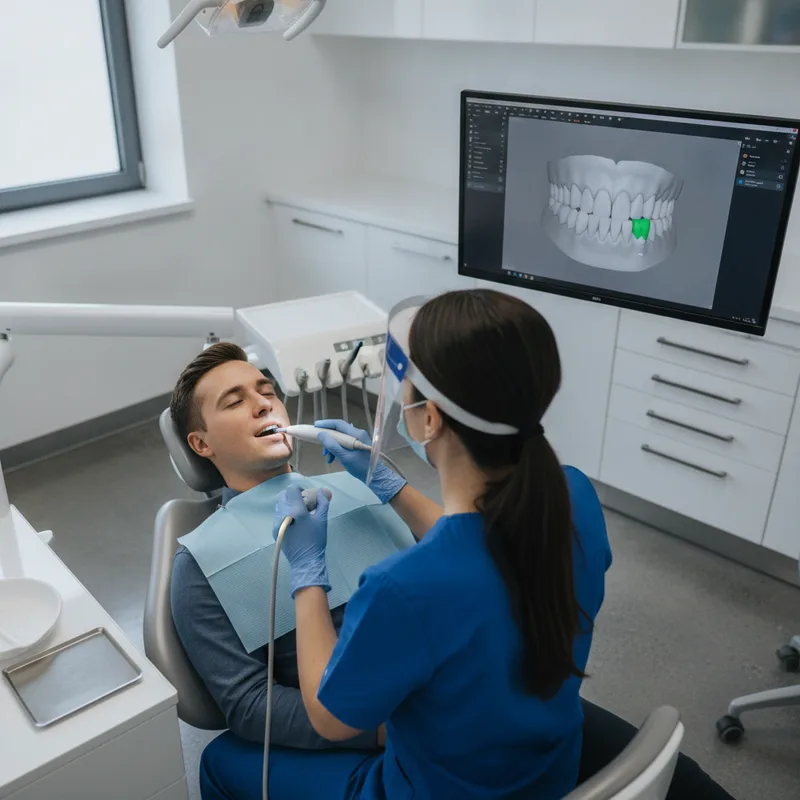
Here's how it usually unfolds. At the first appointment, the area is numbed, the tooth is gently shaped to make room for the crown, and an impression or scan is taken. You leave wearing a temporary crown that protects the tooth while the permanent one is made. The visit is comfortable and routine.
Peterborough Family Dental also offers same-day CEREC crowns, designed and milled in the office so the whole process fits into a single visit. Whether same-day is right depends on the tooth and the material you choose.
Related: Curious how a crown gets designed and milled in one appointment? How same-day crowns work →
Caring for a temporary crown
Temporaries are held with a softer cement on purpose, so they come off easily at your second visit. That also means they can loosen. Chew on the other side, skip sticky or very hard foods, and slide floss out sideways instead of pulling it up. If it does come off, it isn't an emergency, but call the office so the tooth stays protected.
With good care, dental crowns typically last 10 to 15 years, and often longer. Their lifespan depends on the material, the tooth's location, and your oral habits. Daily brushing and flossing, regular checkups, and avoiding habits like grinding or chewing ice all help crowns last.
A crown protects the tooth, but the tooth underneath still needs care. Decay can form at the edge where the crown meets the natural tooth, so brushing and flossing there matter as much as anywhere. A 2015 systematic review in Dental Materials found that both all-ceramic and metal-ceramic single crowns had five-year survival rates above 90%.
Your habits make a real difference. Grinding your teeth, using them to open packages, or chewing hard objects can crack even a durable crown. If you grind at night, a custom nightguard protects both your crowns and your natural teeth. Treat a crown like a natural tooth and it tends to reward you with years of service.
⚠ Call the office if your crown
Related: Crown already came off? Here's exactly what to do until you can get in. Crown fell off: what to do →
The right crown depends on where the tooth sits, how hard you bite, and how much the look matters to you. Front teeth usually get ceramic for a natural finish. Back molars, especially in people who grind, often do best with zirconia or metal.
At Peterborough Family Dental & Implant Center, the team helps you weigh those trade-offs with clear explanations, precise digital scans, and an in-house lab. Cost and coverage are reviewed up front, so there are no surprises. You can read more about dental crowns at our practice.
Dr. Muhammad Rahim, DMD and Dr. Jasper Ainslie, DDS take a gentle, education-first approach, so you understand why a crown was recommended and which material fits best. The practice keeps early-morning hours for busy schedules and serves families across the Monadnock region, including Jaffrey, Dublin, and Hancock.
Keeping crown work in the same place as your routine care helps too. The team that places your crown also tracks how it's wearing at every checkup, watches the gumline for decay, and catches a chipped edge or loosening early, before it becomes a bigger repair. That ongoing relationship is part of what makes a crown last. Regular dental visits catch roughly 80% of oral health issues before they become serious, according to the ADA, and Americans who see a dentist regularly are 60% less likely to lose teeth, per the Journal of Dental Research.
The types of dental crowns each balance appearance, durability, and cost a little differently. Your tooth, your bite, and your priorities decide which one fits, which is why a consultation is the best first step.
If you have a damaged tooth or think you may need a crown, the team at Peterborough Family Dental & Implant Center is glad to help you plan.
Keep reading
Results may vary. Please consult with your dentist at Peterborough Family Dental for personalized treatment recommendations.
Restore your tooth with a custom crown
Schedule a consultation at Peterborough Family Dental & Implant Center to discuss crown materials, cost, and the process for your tooth.
Request an Appointment →Have questions or want to speak with our team?
Contact Us →
Dr. Muhammad Rahim, DMD
Dentist · Peterborough Family Dental & Implant Center
Peterborough, NH dentist providing gentle general, cosmetic, restorative, and implant dentistry for the whole family.
Was this article helpful?
The cost depends on the material, the tooth's location, and whether preparatory work like a root canal or buildup is needed. Porcelain and zirconia crowns typically cost more than metal. A consultation provides a personalized estimate, and insurance often covers part of a needed crown.
Our Peterborough team is happy to answer questions and get you on the calendar.


