
Back to all articlesPreventive Dentistry Dr. Muhammad Rahim, DMDOctober 13, 20269 min read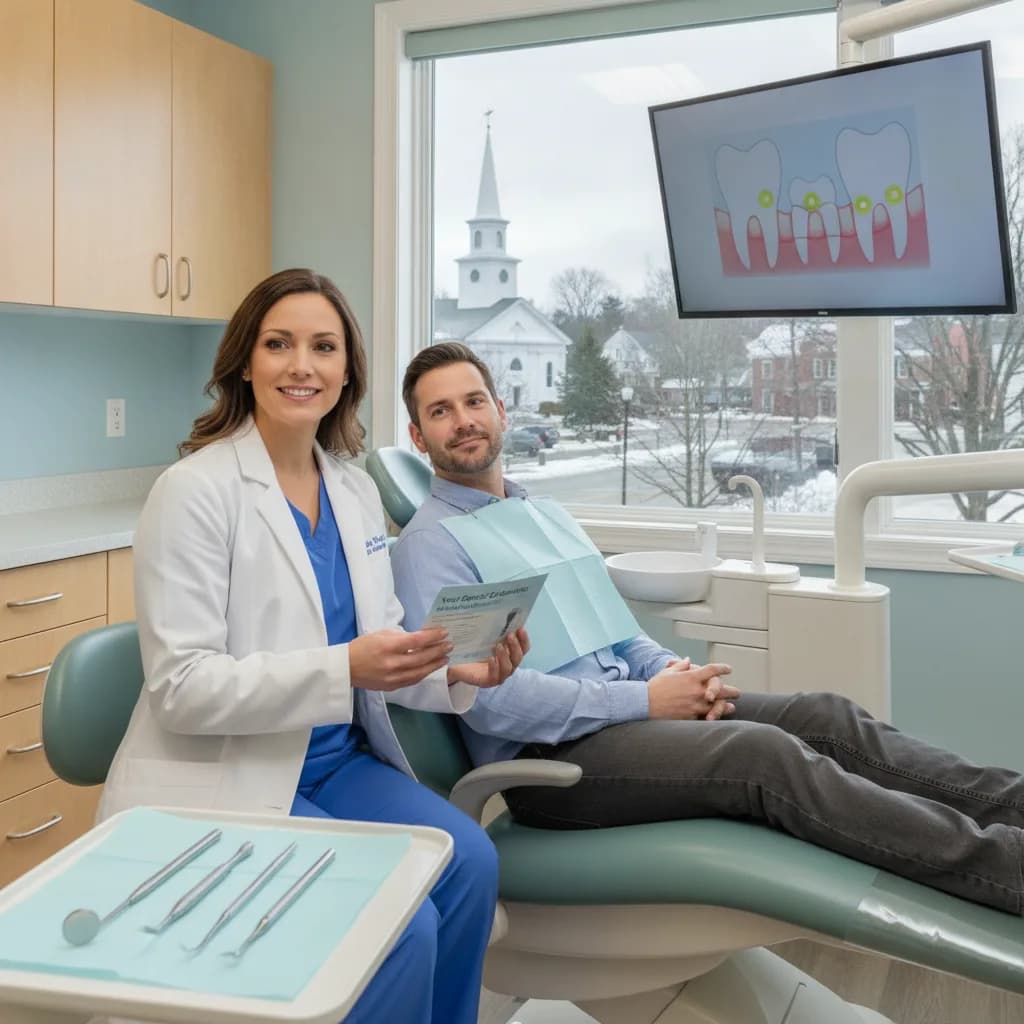
What Happens During a Dental Cleaning? Step-by-Step Guide
Dr. Muhammad Rahim, DMDOctober 13, 20269 min read
Loading blog post
Dr. Muhammad Rahim, DMDOctober 13, 20269 min readCall and you'll reach a real person on our team: no phone tree, no hold music. We'd genuinely love to help.
(603) 924-3664Rather write to us? Contact us
If you're wondering what happens during a dental cleaning, here's the short version: a hygienist removes the plaque and hardened tartar your toothbrush can't reach, polishes your teeth, and flosses between them. Then the dentist checks your teeth, gums, and mouth. The whole visit usually fits in about an hour.
At Peterborough Family Dental & Implant Center in Peterborough, NH, a routine cleaning is the visit we see most, and it's one of the simplest dental services we offer. Knowing each step ahead of time makes it easier to relax, especially if it's been a while since your last visit.
Due for a cleaning?
Our hygiene team works gently and checks in with you throughout the visit.
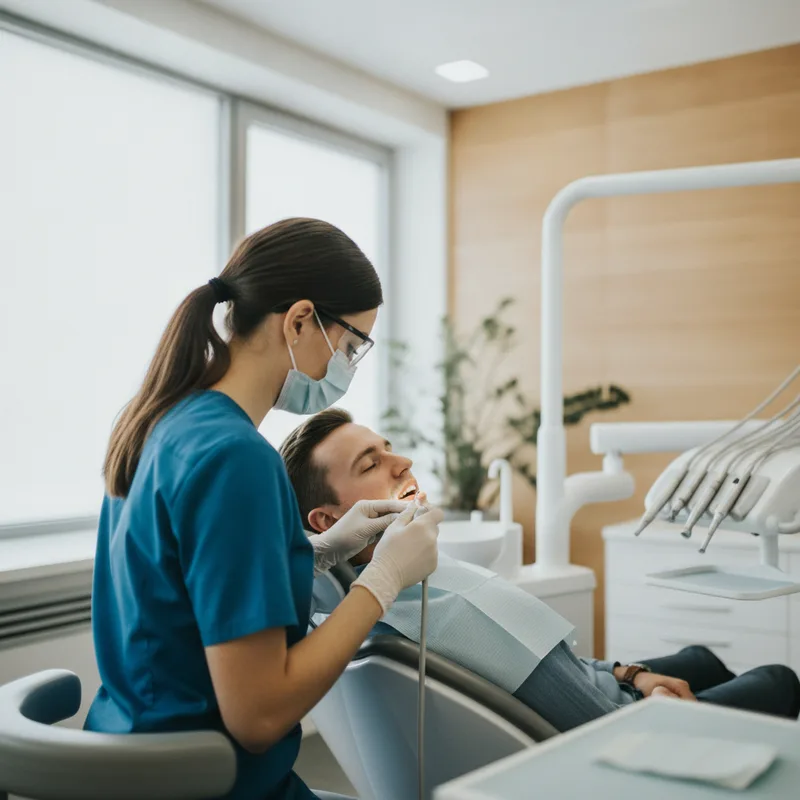
Request an Appointment →A routine dental cleaning follows the same basic order: a quick health review, a look at your gums, X-rays if they're needed, removal of plaque and tartar, polishing, flossing, and an exam by the dentist. Most visits finish with home-care tips and a plan for your next appointment.
Wondering about the X-ray step? Our guide to dental x-ray safety explains the real radiation doses and why you won't need them at every visit.
Hygienists usually use two kinds of tools: an ultrasonic scaler that vibrates and sprays water to break up tartar, and small hand instruments that clean the smaller spots. You'll feel vibration, a cool water spray, and light scraping, but a healthy-gum cleaning shouldn't feel sharp.
Sensitive teeth can react to cold water or the scaler's vibration. If that's you, say so before you start. Your hygienist can adjust the water temperature, switch to hand instruments in sensitive spots, or use a numbing gel along the gums.
And if you tend to gag when anything goes toward the back of your mouth, there are simple ways to make it easier. Our article on how to stop gagging at the dentist walks through what really helps.
Brushing removes soft plaque, but plaque that's left behind hardens into tartar, also called calculus, within days. Once it hardens, a toothbrush and floss can't remove it. Only professional instruments can, which is why even people with great home habits still need regular cleanings.
According to the ADA's MouthHealthy guide to plaque, plaque is a sticky film of bacteria that forms on your teeth every day. The bacteria feed on sugars and produce acids that attack enamel. Left alone along the gumline, plaque also irritates the gums and can lead to gum disease.
Tartar makes things worse. Its rough surface gives new plaque an easy place to stick, and it often forms in the same spots every time: behind the lower front teeth and on the outside of the upper back teeth, near the salivary glands.
These problems are common. The CDC reports that about 1 in 5 adults aged 20 to 64 (21%) has at least one untreated cavity. And a national study in The Journal of the American Dental Association found that about 42% of U.S. adults aged 30 and older have periodontitis. Regular cleanings help catch both early.
A routine cleaning, called a prophylaxis, keeps healthy teeth and gums healthy by cleaning above and just below the gumline. A deep cleaning, called scaling and root planing, treats gum disease by cleaning deeper pockets below the gumline and smoothing the root surfaces, usually with local anesthetic.
| Routine cleaning | Deep cleaning | |
|---|---|---|
| Who it's for | Patients with healthy gums | Patients with gum disease (periodontitis) |
| Where it cleans | Above and just below the gumline | Deep pockets below the gumline and root surfaces |
| Visits | Usually one | Often two or more, one area of the mouth at a time |
| Numbing | Rarely needed | Local anesthetic is common |
You won't need to guess which one applies to you. The gum measurements taken during your visit tell your hygienist and dentist whether a routine cleaning is enough. If they see signs of gum disease, they'll explain why a deeper cleaning is recommended and what it involves.
Related: Told you need a deep cleaning? Here's what the procedure actually involves. Scaling and root planing explained →
During the exam portion of your visit, the dentist checks each tooth for decay, cracks, and worn or failing fillings, looks at your gums and bite, and screens your lips, tongue, cheeks, and throat for signs of oral cancer. At our office, that screening is included at every exam.
Your dentist reviews what the hygienist found, like bleeding spots or deeper gum measurements, and looks at any new X-rays. Together, those details show whether everything is stable or whether something needs a closer look.
At Peterborough Family Dental, an intraoral camera often shows you exactly what the dentist sees, right on the screen beside your chair. A small crack or an old filling with a dark edge is much easier to understand when you can see it yourself. You'll get a plain-language explanation and, if anything needs treatment, a written plan with your options and costs.
Most of the time, the answer is good news: no new problems, keep doing what you're doing. That's the point of a routine visit. Small issues found early are usually simpler and less costly to treat than the same issues found a year later. Learn more on our dental exam page.
For most people, no. A routine cleaning on healthy gums feels like pressure, vibration, and some scraping, but it shouldn't be uncomfortable. Inflamed gums, sensitive teeth, or a long gap since your last visit can make it more noticeable, and your hygienist can slow down or numb sensitive areas.

Here's the thing about long gaps. The more tartar that has built up, the more work it takes to remove, and inflamed gums are more tender. That's not a reason to keep waiting. Each cleaning after the first one back is usually easier than the last.
If dental visits make you nervous, you're in good company. Peterborough Family Dental offers nitrous oxide and oral sedation for patients who want extra help relaxing, and our dental anxiety tips cover what you can do before and during the appointment.
One more tip: agree on a hand signal before you start. Raising your hand to pause gives you control, and most people find just knowing they can stop makes the whole visit calmer.
Before a cleaning, brush and floss as usual and bring a list of your medications. Afterward, you can usually eat and drink right away. If you had a fluoride treatment, your hygienist may ask you to wait a little while or avoid certain foods for a few hours.
First visit with us? Our first dental appointment checklist lists what to bring, from your insurance card to recent X-rays from your last dentist.
After your cleaning, slight gum tenderness or a little bleeding when you brush that night is normal, especially if your gums were inflamed. It usually settles within a day or two. Keep brushing gently twice a day and flossing once a day. That's what keeps the result going.
Before you leave, your hygienist will share tips for your specific mouth and suggest when to come back. Most people return about every six months, but some need more frequent visits and some can go longer. Our guide on how often you should go to the dentist explains how that schedule is decided.
Thinking about upgrading your toothbrush? Our comparison of electric vs manual toothbrushes is a good next read.
Ready to book your cleaning?
Our Peterborough hygiene team opens early, so you can fit your visit in before work or school.
Book a Cleaning →Your cost depends on how you pay. Most dental insurance plans cover routine cleanings at their highest level, and we're in-network with Delta Dental Premier. Patients without insurance can join our VIP Membership Plan, which includes two cleanings a year, or ask about our new patient special.

For a full breakdown of insurance, membership, and payment plans, see our guide to dental financing options. You can also learn more about the visit itself on our teeth cleaning page.
Now you know what happens during a dental cleaning, from the first question to the final polish. If it's been a while, don't let that stop you. We see patients who've been away for years all the time, and we'll never judge.
Results may vary. Please consult with your dentist at Peterborough Family Dental for personalized treatment recommendations.
Schedule your next cleaning
Book a visit with our Peterborough hygiene team and leave with a fresh, healthy smile.
Request an Appointment →Prefer to talk it through first? Call our Peterborough office at (603) 924-3664.
Call (603) 924-3664 →
Dr. Muhammad Rahim, DMD
Dentist · Peterborough Family Dental & Implant Center
Peterborough, NH dentist providing gentle general, cosmetic, restorative, and implant dentistry for the whole family.
Was this article helpful?
Most routine cleanings, including the dentist exam, fit in about an hour. Your first visit, a visit with X-rays, or a cleaning after a long gap can take a bit longer, because there's more tartar to remove and more to review. Your hygienist will let you know if a second visit makes sense.
Our Peterborough team is happy to answer questions and get you on the calendar.


