
Back to all articlesSedation Dentistry Dr. Muhammad Rahim, DMDOctober 11, 202611 min read
Sedation Dentistry: The Stress-Free Path to a New Smile
Dr. Muhammad Rahim, DMDOctober 11, 202611 min read
Loading blog post
Dr. Muhammad Rahim, DMDOctober 11, 202611 min readCall and you'll reach a real person on our team: no phone tree, no hold music. We'd genuinely love to help.
(603) 924-3664Rather write to us? Contact us
Sedation dentistry has quietly changed who gets to keep a healthy, confident smile. For years, fear kept many people across the Monadnock region out of the dental chair, sometimes for a decade. The longer they waited, the bigger the work became. And the bigger the work felt, the harder it was to walk through the door.
That cycle is exactly what sedation breaks. At Peterborough Family Dental & Implant Center, calm, monitored sedation lets nervous patients sit comfortably through the cleanings, fillings, crowns, and implants that rebuild a smile, often in fewer visits than they expected.
This guide explains how sedation dentistry works, which options Dr. Muhammad Rahim, DMD, and Dr. Jasper Ainslie, DDS, offer here in Peterborough, NH, who it suits best, and what a sedation visit actually feels like from the first phone call to the drive home.
Put off care because of nerves?
You are not alone, and you have options. Reach out and tell us your comfort level, and we will plan a gentler visit.
Contact Us →This is one of the dental services offered at Peterborough Family Dental & Implant Center in Peterborough, NH.
Sedation dentistry uses safe, monitored medication to keep you calm and comfortable during treatment. Depending on the option, you may feel mildly relaxed or drift into a light, dreamlike sleep. You stay responsive, your vital signs are watched throughout, and the appointment tends to pass quickly.
The medication does two things at once. It quiets the fight-or-flight response that makes a dental visit feel overwhelming, and it dulls awareness of sounds, sensations, and time. Local anesthetic still numbs the area being treated, so sedation handles the worry while the numbing handles the feeling. The two work as a pair.
This combination is why avoidance is so worth addressing. Small problems rarely stay small. Untreated decay keeps spreading, and the National Institute of Dental and Craniofacial Research documents how cavities progress when care is delayed. And fear is common: a 2021 meta-analysis in the Journal of Dentistry estimated that about 15% of adults worldwide live with dental fear and anxiety. Fewer skipped visits means smaller problems caught sooner.
Think about how anxiety builds. A racing heart makes you more sensitive to every sound and sensation, which feeds the fear, which raises the heart rate again. Sedation steps into that loop and slows it down. Once your body relaxes, the things that felt unbearable start to feel ordinary. That shift is the whole point.
Many people picture general anesthesia in a hospital. That is not what happens here. Most sedation dentistry keeps you breathing on your own and able to respond to a gentle prompt. You are simply too relaxed to care that the visit is happening. For nervous patients, that difference is everything.
Peterborough Family Dental offers two main paths: nitrous oxide for light relaxation and oral sedation for moderate anxiety or longer visits. When a complex surgical case calls for deeper IV sedation, an oral surgery office is usually the right setting. Dr. Rahim and Dr. Ainslie match the option to your nerves, your medical history, and the treatment planned.
Nitrous oxide, sometimes called laughing gas, is the gentlest. You breathe it through a small mask, feel a warm, floaty ease within minutes, and shake it off just as fast once the mask comes off. It is a common choice for kids, and the American Academy of Pediatric Dentistry offers parents guidance on keeping young patients calm. It suits adults with mild jitters who still want to drive themselves home afterward.
Oral sedation steps things up. You take a prescribed tablet before the visit, arrive already relaxed, and often remember little about the appointment. IV sedation, delivered through a vein, is the deepest level and is generally provided by oral surgery offices for complex surgical work. Most patient guides describe this same tiered approach, moving from light gas to deeper sedation.
There is no single right answer. The same patient might choose nitrous oxide for a cleaning and oral sedation for an implant visit a month later. Your dentist reads your comfort level at each visit and adjusts, so the plan can change as your confidence grows. Many anxious patients start deep and step down over time.
| Option | How it feels | Best for | Recovery |
|---|---|---|---|
| Nitrous oxide | Light, floaty calm. You stay fully awake. | Mild nerves, cleanings, fillings, kids | Wears off in minutes; you can drive yourself |
| Oral sedation | Deeply relaxed and drowsy, often hazy on details | Moderate anxiety, longer restorative visits | Several hours; arrange a ride home |
| IV sedation (oral surgery offices) | A light, dreamlike sleep; little memory of the visit | Complex surgical cases, usually referred out | Rest the day; a companion must drive you |
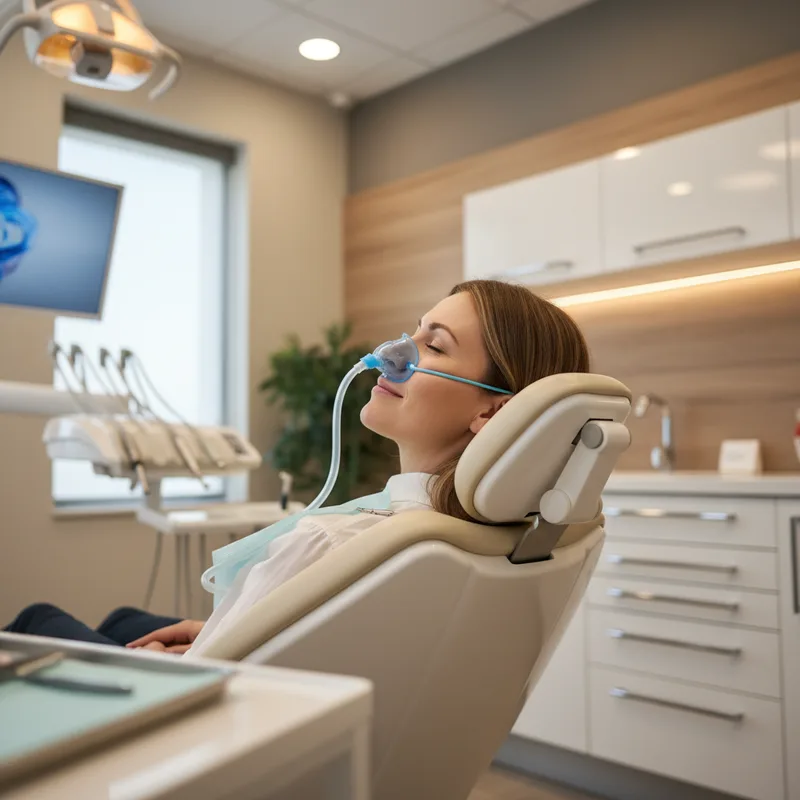
Sedation dentistry has a strong safety record when it is planned around your health history and monitored by trained dentists. Before any sedation, the team reviews your medications and conditions, checks your blood pressure and oxygen, and tracks your vital signs for the entire visit. That oversight is the foundation of safe care.
The track record is reassuring. The ADA describes nitrous oxide as a safe and effective sedative for many dental procedures, and its effects wear off soon after the mask comes off, which is why it is trusted for young children. The key is honest screening: tell your dentist about sleep apnea, heart conditions, pregnancy, and every supplement or prescription you take.
Good candidates are matched carefully, and not everyone needs the deepest option. Sometimes mild relaxation is plenty. Your dentist will recommend the lightest approach that will keep you comfortable, never more than the treatment calls for.
Monitoring is what makes that judgment safe. Throughout the visit, the team tracks your oxygen levels, heart rate, and breathing, and the medication can be adjusted in real time. If you respond well to a small dose, that is where you stay. This steady oversight is standard for sedation dentistry and is a core reason the approach has earned its reputation for safety.
Results may vary. Please consult with your dentist at Peterborough Family Dental for personalized treatment recommendations.
Talk through your health history with us
A quick consultation lets Dr. Rahim or Dr. Ainslie recommend the safest, lightest sedation for your needs.
Call (603) 924-3664 →You may be a good candidate for sedation dentistry if anxiety keeps you from the dentist, you have a strong gag reflex, you need a long or complex visit, or numbing alone never feels like enough. Sedation also helps patients with limited jaw mobility or sensory sensitivities sit through care comfortably.
Dental fear is far more common than most people admit. A 2021 Journal of Dentistry meta-analysis pooled 31 studies of more than 72,000 adults and estimated that about 15% have dental fear and anxiety, with about 3% reporting severe fear. For many of them, a single calm visit rewrites years of dread. The CDC notes that regular dental care is one of the best ways to keep small issues small, and its oral health guidance underscores how routine visits prevent bigger problems.
Common reasons patients in Peterborough, Jaffrey, and Dublin choose sedation include:
Avoidance carries a real cost. When small cavities go untreated, they grow into the kind of problems that send people to the emergency room. The ADA Health Policy Institute reports roughly 2 million emergency room visits a year in the US for dental issues, most of which a routine visit could have prevented. Sedation gives fearful patients a way to break that pattern before it starts.

Sedation dentistry makes a new smile reachable by letting you complete bigger treatment comfortably and in fewer visits. Implants, veneers, crowns, and full-arch restoration all take time in the chair. When fear and fatigue are off the table, your dentist can do more in each appointment and you finish sooner.
That matters because tooth loss is widespread. The American College of Prosthodontists estimates that 120 million Americans are missing at least one tooth, and untreated gaps tend to multiply over time.
Healthy gums are the foundation for any rebuild, which is why the American Academy of Periodontology's gum disease information is worth reading before implant work begins. Implants themselves have a strong long-term track record when the gums and bone around them are healthy.
The payoff goes beyond function. The American Academy of Cosmetic Dentistry found that 99.7% of adults view a smile as an important social asset. Sedation is what gets anxious patients to the finish line of that transformation, whether the plan is a single veneer or a full-arch All-on-4 restoration. Explore the full range of treatment on our dental services page.
There is a long game here too. Staying on top of care protects what you rebuild. People who keep up with regular dental visits are about 60% less likely to lose teeth, the Journal of Dental Research found. Sedation makes those ongoing visits possible for patients who once cancelled every appointment, so a new smile is not just built, it lasts.
Related: See how implant treatment can rebuild a smile after missing teeth in → Smile Restoration After Tooth Loss
Picture the smile you have been putting off
Comfortable, sedation-supported visits can turn a long treatment plan into a few easy appointments.
Plan My New Smile →A sedation visit follows a simple arc: a health review and instructions beforehand, calm monitored treatment during, and a short rest afterward. Your dentist explains every step in advance so there are no surprises, and the team confirms who is driving you home before you arrive.
Before the appointment, you will get clear directions on eating, medications, and timing. With oral sedation, plan to bring a responsible adult to drive. During the visit, you settle into the chair, the sedation takes effect, and the work begins once the area is numb. Curious how long that feeling lasts afterward? Our guide on how long dental numbing lasts explains what to expect. Most patients are surprised how little time seems to pass.
A short prep list keeps the day easy:

Afterward, nitrous oxide clears within minutes, while oral sedation calls for a quiet day at home. Grogginess fades over a few hours. The practice keeps early hours from 7 AM at 21 Grove Street, which makes it easier to schedule a sedation visit and still have the day to rest. You can meet the dentists and learn more about our practice before you come in.
A few simple habits make recovery smoother. Drink water, eat something light once you feel steady, and skip strenuous activity until the next day. If your visit included surgical work, the team sends you home with written aftercare notes. Patients from Hancock, Greenfield, and the wider Monadnock region often pair a sedation appointment with a relaxed morning, then head home to settle in.
The hardest part of fixing a smile is usually walking through the door. Sedation dentistry removes that barrier, turning visits people have dreaded for years into something calm and manageable. The teeth get treated, and so does the fear.
If anxiety has stood between you and the care you need, you have a gentler path forward right here in Peterborough. Talk to Dr. Rahim or Dr. Ainslie about which sedation option fits you, and take the first small step toward a healthier, more confident smile.
Ready for calm, comfortable dental care?
Tell us what has kept you away. We will build a sedation plan that fits your comfort level and gets you back to a healthy, confident smile.
Request a Consultation →Prefer to talk it through first? We are happy to answer your questions.
Call (603) 924-3664 →
Dr. Muhammad Rahim, DMD
Dentist · Peterborough Family Dental & Implant Center
Peterborough, NH dentist providing gentle general, cosmetic, restorative, and implant dentistry for the whole family.
Was this article helpful?
Yes. Sedation dentistry is safe for most healthy patients when it is matched to your medical history and monitored by trained dentists. The ADA describes nitrous oxide as safe and effective for many procedures. Honest screening about your health and medications is essential.
Our Peterborough team is happy to answer questions and get you on the calendar.


