
Back to all articlesOrthodontics Dr. Muhammad Rahim, DMDOctober 11, 20269 min read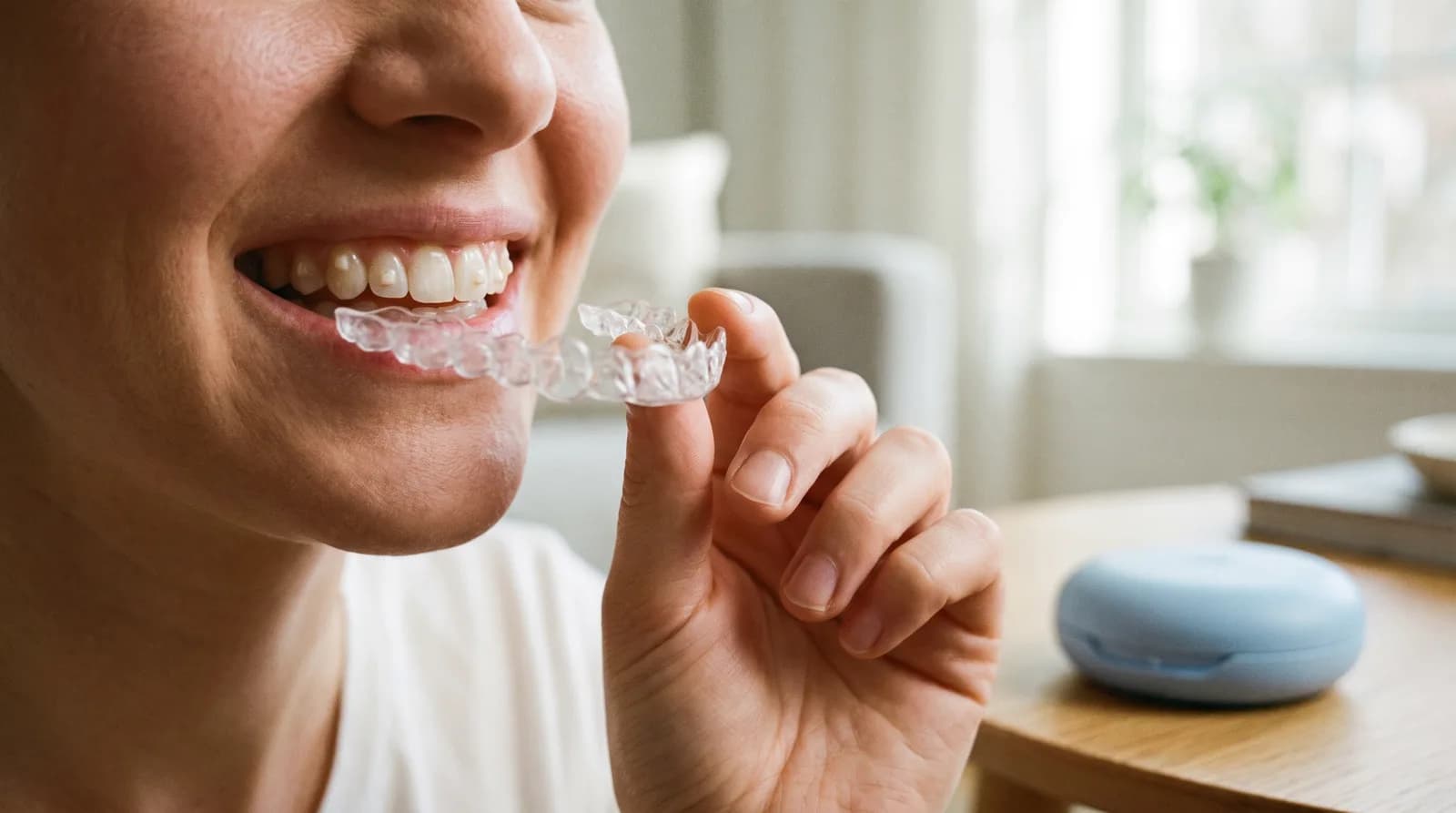
Invisalign Attachments: What They Are and Why You Need Them
Dr. Muhammad Rahim, DMDOctober 11, 20269 min read
Loading blog post
Dr. Muhammad Rahim, DMDOctober 11, 20269 min readCall and you'll reach a real person on our team: no phone tree, no hold music. We'd genuinely love to help.
(603) 924-3664Rather write to us? Contact us
Invisalign attachments are small, tooth-colored bumps bonded to certain teeth to help clear aligners grip and move them more precisely. They're made of the same composite material used for white fillings, they're temporary, and they're polished off when treatment ends. Not everyone needs them, but most aligner plans use at least a few.
This guide explains what attachments do, how they're placed and removed, whether they hurt, how they look, and how to care for them during treatment. You can also browse all of our dental services to see the full range of care we offer.
Thinking about clear aligners?
Dr. Muhammad Rahim and Dr. Jasper Ainslie can show you your digital treatment plan, including exactly where attachments would go and why, at a free consultation.
Request an Appointment →Invisalign attachments are small shapes of tooth-colored composite resin bonded to the front of selected teeth. Each one acts like a handle, giving the aligner something to push against so it can rotate, tip, or move a tooth in ways smooth plastic alone can't. They're placed early and removed at the end of treatment.
Attachments come in different shapes, such as small rectangles, ovals, or angled ridges. Each shape is chosen for the movement a particular tooth needs. A rectangle might help hold a tooth steady, while a beveled shape can help push it in a specific direction.
Your digital treatment plan decides which teeth get attachments and which don't. Some people have just a handful, while others have one on most teeth. It depends on how complex the movements are.
Because they match your tooth color, most people won't notice them in everyday conversation. They're most visible up close or under bright light.
Attachments are also different from the aligner trays themselves. You'll switch to a new set of trays every week or two, but the attachments stay bonded the whole time. Each new tray is shaped to fit around them, which is why the first fit of every new set can feel especially tight.
Some aligner plans need attachments because certain tooth movements, especially rotations, root movements, and pulling a tooth down into place, are hard for smooth plastic to achieve. Attachments give the aligner extra grip and leverage, which can help those teeth track the plan more closely.
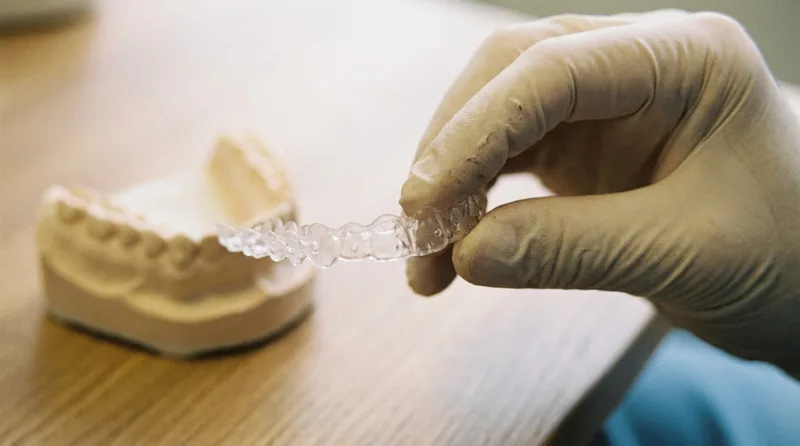
Aligners are good at some movements and less predictable at others. A 2014 study in BMC Oral Health by Simon and colleagues measured tooth movement in 30 Invisalign patients and found aligners achieved an average of 59% of the planned movement. Molar distalization reached about 87%, while premolar rotation reached only about 40%.
A 2025 systematic review in Dentistry Journal on rotations found accuracy ranged from 36% to 85%, averaging around 65%. Canines and premolars were the least predictable teeth. The authors noted that attachments were widely used to help, though their effect varied between studies.
59%
average share of planned movement achieved in one study
Source: BMC Oral Health, 2014
~65%
average accuracy for rotations across 12 studies
Source: Dentistry Journal, 2025
~40%
accuracy for premolar rotation, the hardest movement studied
Source: BMC Oral Health, 2014
That's why dentists plan with attachments, staging, and refinement aligners. Treatment often includes a mid-course scan and extra trays to finish movements that lagged behind.
Attachments are much smaller than braces brackets, tooth-colored instead of metal, and have no wires connected to them. They don't move teeth on their own. Instead, they work with the aligner, which does the pushing. Brackets, by contrast, hold a wire that applies constant force between adjustment visits.
The ADA notes that braces and aligners are the appliances orthodontists most commonly use to guide teeth into position, and that the goal of either is a healthy bite where straight teeth meet properly. Both can work well. The right choice depends on your bite, your lifestyle, and how consistently you can wear removable trays.
A few practical differences stand out:
That last point matters most. Attachments can't do their job if the aligners spend half the day in a case.
Invisalign attachments are put on in a short, painless visit with no needles or drilling. The dentist cleans and lightly prepares the tooth surface, fills a template tray with composite in the right shapes, seats it over your teeth, and hardens the material with a blue curing light. Then the template comes off.
Here's what the appointment usually looks like:
The whole process typically takes well under an hour. Many people are surprised by how quick it is, and there's no numbing needed.
Some plans also include small amounts of reshaping between teeth, sometimes called interproximal reduction, to create room for crowded teeth to line up. The 2025 review noted this was often used alongside attachments. Your dentist will explain beforehand if your plan includes it.
Expect your first aligners to feel snug once the attachments are on. That tight fit is exactly what lets them work.
Invisalign attachments don't hurt to place, but your teeth may feel sore for a few days with each new set of aligners, and the bumps can feel rough on your lips at first. Because they're tooth-colored, they're subtle, though they can be more noticeable on front teeth up close.
The roughness usually fades within a week as your lips and cheeks get used to it. If one edge feels sharp, your dentist can smooth it quickly.
| Concern | What to expect |
|---|---|
| Pain during placement | None; no needles or drilling |
| Soreness | Mild pressure for a few days with each new tray |
| How they feel | Slightly rough at first, usually unnoticed after a week |
| Visibility | Subtle; matched to tooth color |
| Speech | Rarely affected; aligners themselves may cause a brief lisp |
Staining is the bigger cosmetic issue. Composite can pick up color from coffee, tea, red wine, and curry over months of treatment, which makes attachments stand out more. Good habits keep them looking clean.
Care for teeth with attachments by brushing gently around each bump twice a day, flossing daily, and taking aligners out to eat or drink anything except plain water. Brush before putting aligners back in so food isn't trapped against the attachments, and limit staining drinks to keep them from discoloring.

The ADA recommends brushing twice a day with a soft-bristled brush at a 45-degree angle to the gums. With attachments, take a little extra time around each one, since plaque likes to collect along their edges.
If an attachment falls off, don't panic. Keep wearing your aligners and call your dentist. It can usually be replaced quickly using the original template.
At the end of treatment, your dentist removes attachments by gently polishing them away with a dental bur and polishing tools. The process is quick, doesn't require numbing, and leaves your natural enamel smooth. Many people feel only light vibration, and the whole visit often takes less time than the original placement.
After the attachments are gone, your dentist will polish the teeth and check your bite. This is also when you'll get your retainers, which are essential for keeping teeth in their new position.
Some people need attachments placed again later if refinement aligners are needed to finish a stubborn movement. That's a normal part of treatment and doesn't mean anything went wrong.
Once they're removed, your teeth should feel smooth. If you notice any rough spot afterward, mention it at your next visit so it can be polished.
Retainers are the final, and arguably most important, step. Teeth naturally try to drift back toward their old positions, especially in the first months after treatment. Wearing your retainer exactly as directed protects the time and money you've invested.
A good time to plan a professional cleaning or whitening is right after attachments come off. Whitening while attachments are on can leave lighter and darker patches, so most dentists suggest waiting until treatment is finished.
We plan attachments as part of your digital treatment plan, so you can see exactly where they'll go and why before you start. We place them in a single quick visit, check them at every follow-up, and polish them off at the end, along with fitting your retainers so your new smile stays put.
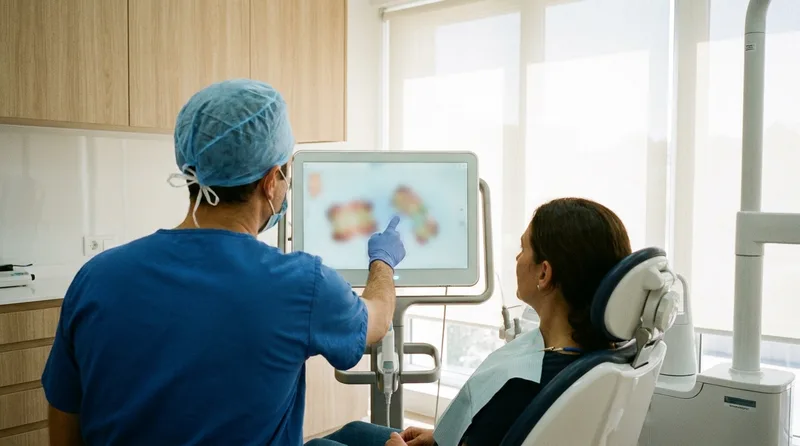
Our clear aligner treatment starts with a free consultation and a digital scan instead of putty impressions. In a 2023 randomized trial, 75% of children preferred a digital scan over a putty impression. Treatment starts at $3,500, with CareCredit and monthly payment options available.
New to aligners? Our clear aligners guide covers how treatment works, who it suits, and what it costs.
Invisalign attachments are small, temporary, and a big part of why aligners can handle more than simple touch-ups. Keep them clean, protect them from hard foods, and they'll do their job quietly until the day they're polished away.
Results may vary. Please consult with your dentist at Peterborough Family Dental for personalized treatment recommendations.
See your smile plan before you start
Book a free clear aligner consultation and digital scan. Call (603) 924-3664 or request a visit online.
Book a Free Consultation →
Dr. Muhammad Rahim, DMD
Dentist · Peterborough Family Dental & Implant Center
Peterborough, NH dentist providing gentle general, cosmetic, restorative, and implant dentistry for the whole family.
Was this article helpful?
No. Attachments bond to the enamel surface much like a white filling, without drilling into the tooth. When treatment ends, your dentist polishes them away and smooths the enamel. Keeping the area clean during treatment is the key to avoiding staining or decay around them.
Our Peterborough team is happy to answer questions and get you on the calendar.


