
Back to all articlesDental Implants Dr. Muhammad Rahim, DMDOctober 6, 202611 min read
Bone Graft After Tooth Extraction: Do You Really Need One?
Dr. Muhammad Rahim, DMDOctober 6, 202611 min read
Loading blog post
Dr. Muhammad Rahim, DMDOctober 6, 202611 min readCall and you'll reach a real person on our team: no phone tree, no hold music. We'd genuinely love to help.
(603) 924-3664Rather write to us? Contact us
Do you need a bone graft after tooth extraction? Not always. Plenty of extractions heal fine on their own. But if your dentist mentioned a graft, there's usually a specific reason, and it almost always has to do with what you plan to put in that space later.
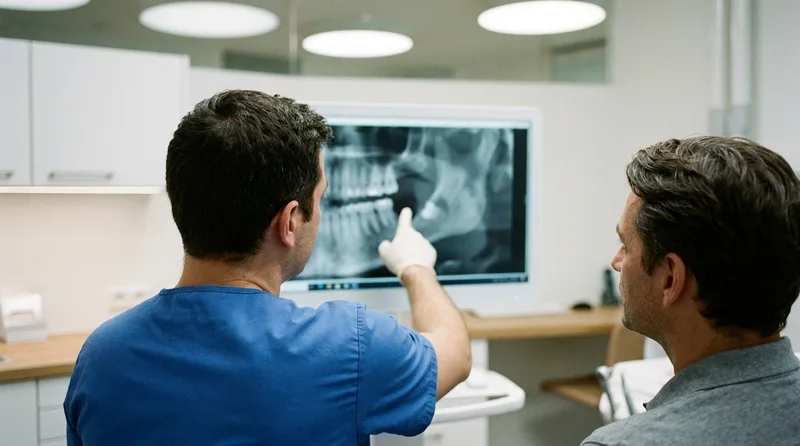
Hearing the word “graft” can make a simple extraction suddenly feel like surgery. It's usually much smaller than it sounds. In most cases, it means placing bone-building material into the empty socket right after the tooth comes out, so the jaw keeps its shape while it heals. At Peterborough Family Dental & Implant Center, we plan every case of bone grafting treatment with a 3D scan, so the recommendation is based on what your bone actually looks like.
Below, you'll find why grafts are recommended, when you can skip one, what they're made of, and how long healing takes.
Bone grafts after extraction at a glance
What it is
Graft material placed in the socket to help the jaw keep its shape
Who needs one
Mostly people planning an implant later, or with thin or damaged bone
When it's done
Usually during the same visit as the extraction
Healing time
Typically a few months before an implant can go in
Told you might need a graft?
Get a clear answer from a 3D scan. Dr. Muhammad Rahim and Dr. Jasper Ainslie will show you the images and explain exactly why a graft is or isn't recommended.
Request an Appointment →No, you don't always need a bone graft after tooth extraction. A graft is mainly recommended when you plan to replace the tooth with an implant later, when the socket walls are thin or damaged, or when the tooth is in a visible area where the gumline matters.
Related: Healing well starts with good care in the first few days. Tooth extraction aftercare tips →
Think of a graft as protecting the site, not fixing a problem that already exists. Once a tooth is removed, the bone around the empty socket naturally starts to shrink. A graft placed right away helps hold that space open, so there's enough bone left when it's time for the next step.
So the question your dentist is really asking is: what's going in this spot next?
Usually yes
Planning an implant later
Keeping bone width and height makes future implant placement simpler.
Often yes
Front tooth in your smile
Preserved bone helps keep the gumline even and natural looking.
Often no
Wisdom tooth removal
There's usually no plan to replace it, so preserving the site isn't needed.
Case by case
Bridge or denture planned
A graft can help the replacement look and fit better, but isn't always required.
If you aren't sure yet how you'll replace the tooth, say so. That uncertainty is useful information, and it often tips the decision toward preserving the site while you decide.
The jawbone shrinks after a tooth is removed because the bone that held the root no longer has a job. Without a root to support, the body gradually reabsorbs part of the socket walls, and most of that change happens in the first few months after extraction.
The numbers are bigger than most people expect. A systematic review of post-extraction bone changes published in Clinical Oral Implants Research found the ridge lost about 32% of its width by three months, and between 29% and 63% by six to seven months. Height dropped by 11-22% over six months.
How much the jaw ridge can shrink after an extraction (no graft)
Source: Tan et al., Clinical Oral Implants Research, 2012. Bars show the upper end of each reported range.
Width matters most for implants. An implant needs bone wrapped around it on all sides, so a ridge that's narrowed too much can't hold one properly without extra work. And a 12-month study in the International Journal of Periodontics & Restorative Dentistry confirmed that the biggest changes happen within the first year.
That's the whole case for grafting at extraction. It's far easier to keep bone than to rebuild it later.
A socket preservation graft is bone graft material placed into the empty tooth socket immediately after extraction. It acts as a scaffold that your own bone grows into over the following months, helping the ridge keep more of its original width and height for a future implant or other replacement.
How a socket preservation graft is done
Numbing and gentle extraction
The tooth is removed carefully to protect the thin socket walls.
Cleaning the socket
Any infected or inflamed tissue is cleared out.
Placing the graft
Granules of graft material are packed gently into the socket.
Covering the site
A collagen membrane or sponge is placed over the graft, often with a few stitches.
Healing
Your body gradually replaces the graft with new bone over several months.
Does it work? The evidence is solid. A 2019 meta-analysis of 22 randomized trials in the Journal of Clinical Periodontology found that grafting the socket reduced bone loss compared with letting it heal alone, saving roughly 2 mm of ridge width on average. Two millimeters sounds tiny. For an implant, it can be the difference between a straightforward placement and needing more grafting later.
A graft doesn’t add time to your treatment so much as it protects your options for the next step.
A bone graft is usually recommended when you're planning an implant but not placing it on extraction day, when the socket walls are thin or broken, when infection has damaged the bone, or when the tooth is in a visible spot. The decision depends on your scan and your replacement plan.
A simple way to think about the decision
↓
↓
That second question is where timing comes in. In some cases, your dentist may suggest placing an implant on extraction day, which can change how the graft is used.
Front teeth deserve a special mention. The bone covering the roots of upper front teeth is often paper thin, and it's the first to shrink. That's why grafts are recommended more often for visible teeth, even when the rest of the mouth is healthy.
Want to see your own scan?
Your implant consultation includes 3D imaging, so you can see the bone around your tooth and understand exactly what a graft would do.
Book a Consultation →You can often skip a bone graft when you don't plan to replace the tooth, such as most wisdom teeth, or when your scan shows thick, healthy bone around the socket. A graft may also be optional if you're choosing a bridge or denture and the area isn't highly visible.

A graft is often optional when
Think twice about skipping when
Myth
“If my dentist recommends a graft, I’m being upsold.”
Fact
A graft is recommended to protect future options. A 3D scan shows objectively whether your bone needs help, and you can always ask to see it or get a second opinion.
Skipping a graft doesn't close the door on implants forever. It just means that if bone shrinks too much, rebuilding it later can be a bigger procedure than preserving it would have been.
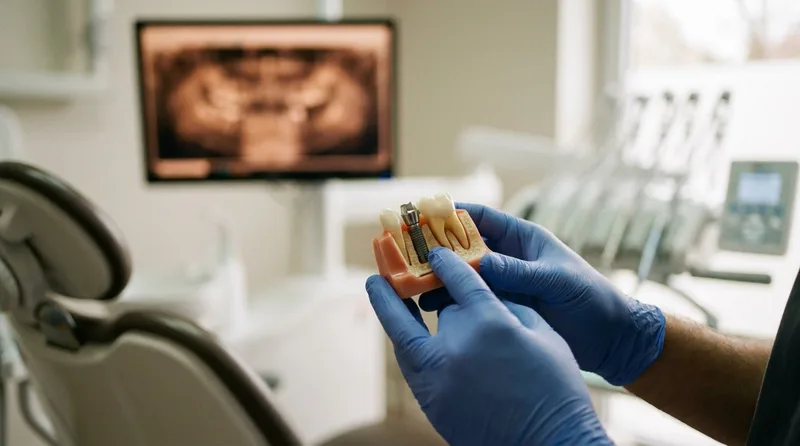
Bone grafts are made from your own bone, processed human donor bone, processed animal bone, or synthetic materials. For most socket preservation grafts, dentists use donor or animal-derived granules, because they work well, are carefully sterilized, and don't require a second surgical site to harvest bone.
| Graft type | Source | Good to know |
|---|---|---|
| Autograft | Your own bone | Gold standard for bone growth, but needs a second site to collect it |
| Allograft | Donor human bone, processed and sterilized | Very common for socket grafts |
| Xenograft | Usually bovine (cow) bone, processed | Holds space well while new bone forms |
| Alloplast | Synthetic materials such as calcium phosphate | Option for patients who prefer non-tissue materials |
All of these act as a scaffold. Your body slowly fills in the framework with its own new bone. If you have personal, dietary, or religious preferences about animal or donor materials, mention them. There's usually a suitable alternative.
Recovery after a socket graft feels very similar to recovery from a regular extraction. Most people have mild swelling and tenderness for a few days, managed with over-the-counter medication. You may notice a few small graft granules in your mouth early on, which is normal.
What healing typically looks like
A typical pattern for a small socket graft. Larger grafts take longer.
Your dentist will give you written aftercare instructions for the first days. The bigger picture is simple: protect the area, keep it clean, and let the bone do its slow work.
After a socket preservation graft, most patients wait about three to six months before an implant is placed, so new bone has time to form. Larger grafts that rebuild bone already lost may need longer. A follow-up scan confirms when the site is ready.
| Graft situation | Typical wait before implant |
|---|---|
| Graft placed with an immediate implant | No separate wait; heals with the implant |
| Socket preservation graft | About 3-6 months |
| Rebuilding a narrowed ridge | Often several months, sometimes longer |
| Sinus lift for upper back teeth | Varies; often planned with an oral surgeon |
The wait pays off. Implants have a 95-98% success rate over 10 years, according to the Journal of Oral and Maxillofacial Surgery, and that success depends on solid bone. Once healed, implant-supported teeth can restore up to 90% of natural chewing power, according to the AAID.
Related: Still weighing what comes after the extraction? Our main guide walks through implants, bridges, and dentures. replacing the tooth after extraction →
Say yes when a bone graft after tooth extraction protects a clear next step, like an implant or a front tooth you care about. If you won't replace the tooth, or your scan shows thick, healthy bone, it's fair to ask whether you really need one. A good dentist will explain either way.
The most useful thing you can do is ask before the extraction, not after. Once the socket heals on its own, the chance to preserve it easily has passed.
Patients from Peterborough, Jaffrey, Dublin, Hancock, and across the Monadnock region come to us with exactly this question. We'll show you your scan, explain what a graft would and wouldn't do, and let you decide with real information in front of you.
Results may vary. Please consult with your dentist at Peterborough Family Dental for personalized treatment recommendations.
Get a Straight Answer About Your Bone Graft
Schedule a consultation at our Peterborough, NH office. We'll take a 3D scan, walk you through what it shows, and give you a written plan.
Request an Appointment →Prefer to talk it through first? Our front desk opens at 7 AM.
Call (603) 924-3664 →
Dr. Muhammad Rahim, DMD
Dentist · Peterborough Family Dental & Implant Center
Peterborough, NH dentist providing gentle general, cosmetic, restorative, and implant dentistry for the whole family.
Was this article helpful?
Most people describe it as similar to a regular extraction. The area is fully numbed during the procedure, and afterward mild soreness and swelling usually last a few days. Over-the-counter medication is typically enough, and sedation is available for nervous patients.
Our Peterborough team is happy to answer questions and get you on the calendar.


